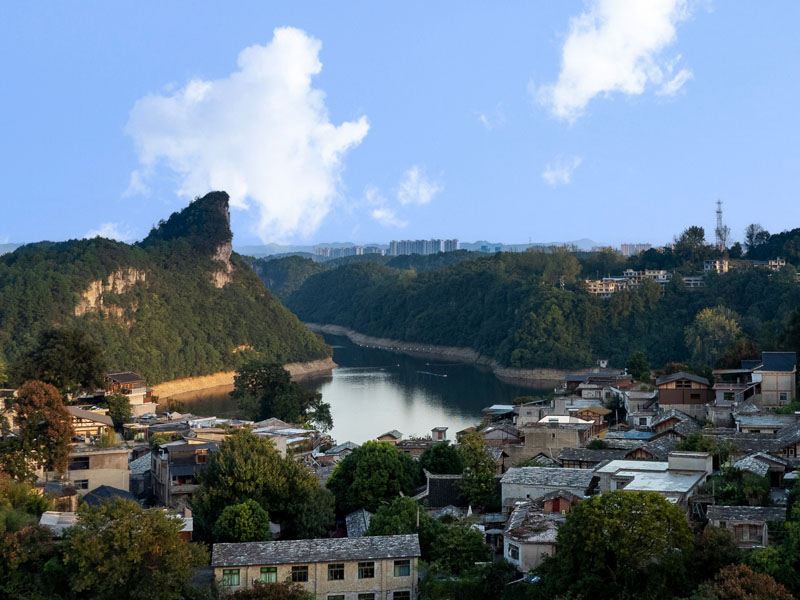
Nestled in the clear blue waters of Huaxi Reservoir, Zhenshan Village lies peacefully on a natural peninsula, making it an extremely rare "mountain-and-water-surrounded" ancient village in the suburbs of Guiyang. Founded during the Wanli Period of the Ming Dynasty, it originated from the military garrison system established after the Bozhou Campaign and has a 400-year-old fortress civilization. Covering a total area of 3.8 square kilometers, the village is surrounded by water on three sides and backed by mountains on one side, forming a natural barrier with the unique terrain of Half Mountain, and has been a military fortress since ancient times. After repairs in the Ming and Qing dynasties and centuries of sedimentation, it has completely preserved the pattern of Ming Dynasty fortresses and the original style of Buyi settlements. Free from the hustle and bustle of excessive commercialization, only real mountains and waters, stone houses, ancient alleys and folk customs remain quietly here. As a China Historical and Cultural Village, China Traditional Village, Cultural Relic Protection Unit of Guizhou Province, and Sino-Norwegian Cooperative Buyi Ethnic Ecological Museum, Zhenshan Village is a living, touchable and immersive original ecological stone ancient village.
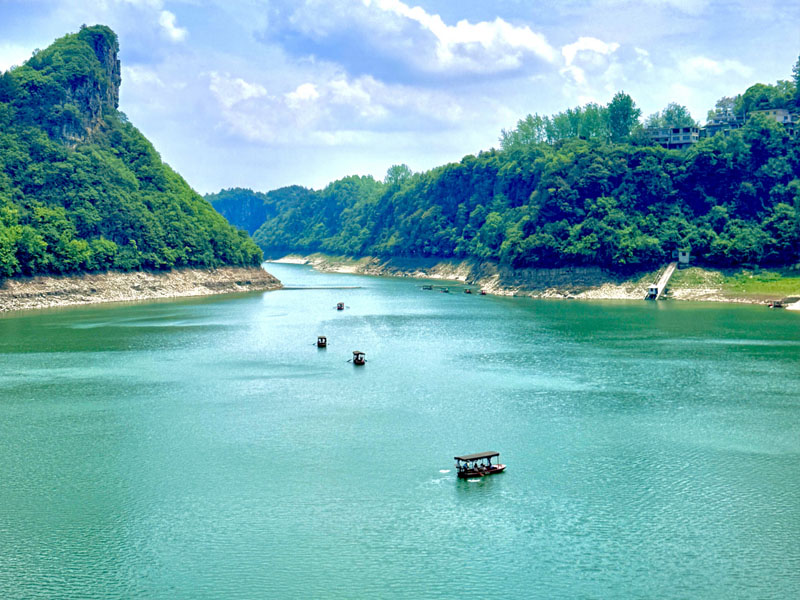
Zhenshan Village enjoys the excellent landscape of the middle section of Huaxi Reservoir, surrounded by blue waves on three sides and backed by green mountains on one side. Its peninsula landform is unique and the landscape pattern is natural. In ancient times, it was built as a military fortress by garrisoning troops on the mountains and setting up defenses by the water; today, with mountains and waters blending together, it has become a quiet and secluded mountain secret realm. Boating on the clear blue water of Huaxi Reservoir, you can overlook the majestic cliffs of Half Mountain in the distance and view the scattered stone houses of the ancient village up close. The water and mountains, ancient buildings and dwellings complement each other beautifully. In the morning, mist shrouds the mountains and water vapor curls up; in the evening, the setting sun reflects on the water and the evening breeze brushes your face. The flowing mountains and waters wash away the hustle and bustle of the world. This clear water that has nourished the village for thousands of years has not only shaped the smart and beautiful natural scenery of Zhenshan, but also nurtured the leisurely and tranquil mountain life here, giving this stone ancient village both majestic character and gentle poetry.
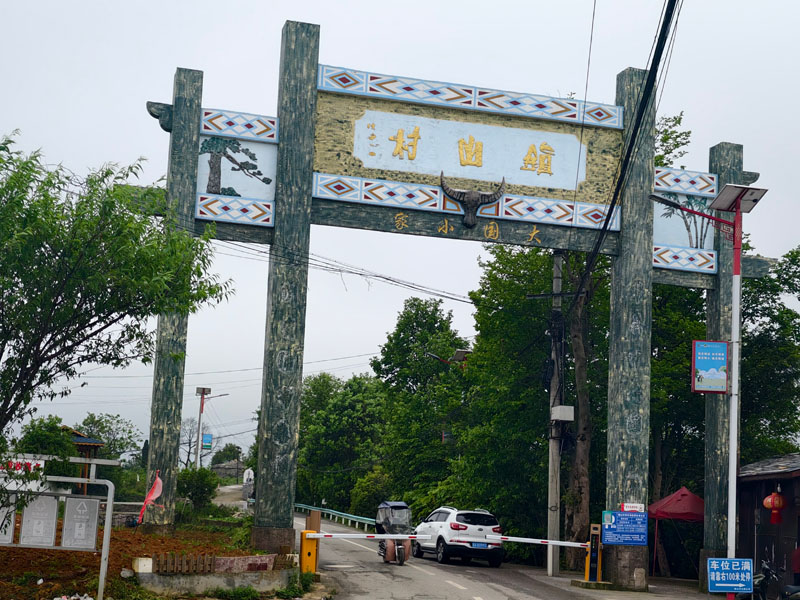
The simple and solemn entrance archway of the village is the first gateway to enter the ancient village of Zhenshan and also the iconic symbol of this mountain-and-water ancient village. The archway has a simple and grand shape with a strong ancient charm, integrating the characteristics of mountain villages and fortress buildings. Standing quietly between mountains and waters, it welcomes guests from all directions. Passing through this archway, you bid farewell to the hustle and bustle of the outside world and officially step into this stone ancient village dating back to the Ming Dynasty. After more than 400 years of wind and rain changes, the archway has stood quietly, witnessing the four seasons and the mortal life of the village, guarding the fortress culture and Buyi customs, and opening a healing journey for every traveler to explore the thousand-year-old ancient village and touch the mountain humanities immersively.
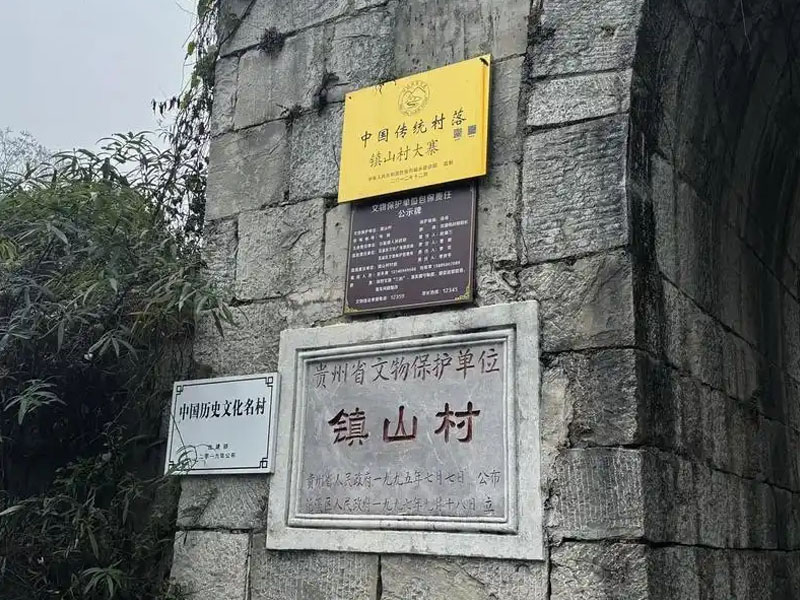
Above the entrance gate of Zhenshan Village, three heavy honorary plaques are the highest recognition of this ancient village by time and the government, as well as the best evidence of its cultural value. From top to bottom, they are "China Traditional Village", "China Historical and Cultural Village" and "Cultural Relic Protection Unit of Guizhou Province". The three honors highlight the irreplaceable historical, architectural and folk value of Zhenshan Village. For 400 years, the village has completely preserved the pattern of Ming Dynasty fortresses, the original Buyi folk customs and the all-stone ancient building complex, without excessive transformation by modern buildings, making it a rare living ancient village in Guizhou. In 2000, relying on its unique cultural heritage, Zhenshan Village built the Sino-Norwegian Cooperative Buyi Ethnic Ecological Museum, becoming an open-air, living heritage treasure house that allows the thousand-year-old village history and national cultural context to be perpetuated.
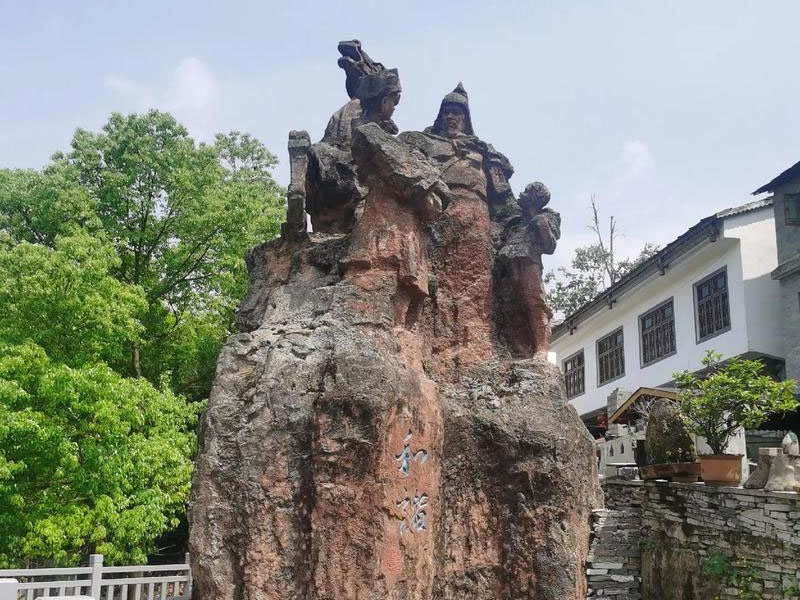
The Harmony Stone Statue at the entrance of Zhenshan Village is the spiritual totem of the national integration and endless vitality of the whole village. Standing majestically, the statue mainly depicts three images: a Ming Dynasty garrison general, a Buyi woman holding a baby, and a steed, with a solemn bearing and profound meaning. The word "Harmony" engraved on the base fully expresses the humanistic foundation of Zhenshan for more than 400 years. According to village history and epitaph records, after the Bozhou Campaign in the 28th year of Wanli Period of the Ming Dynasty, General Li Renyu, the assistant commander of Luling County, Ji'an Prefecture, Jiangxi Province, led his troops to garrison Zhenshan in Guizhou. His wife unfortunately died of illness. Grateful for the local customs, the general married into the local Buyi Ban clan, took root in the mountains and settled down. The couple had two sons, the eldest son taking the father's surname Li and the second son taking the mother's surname Ban, thus starting the unique history of "one family with two surnames, intermarriage and coexistence of Han and Buyi people" in Zhenshan Village. For 400 years, the Li and Ban clans have lived together in harmony, and Han culture and the original Buyi culture have deeply integrated, creating this unique integrated ancient village.
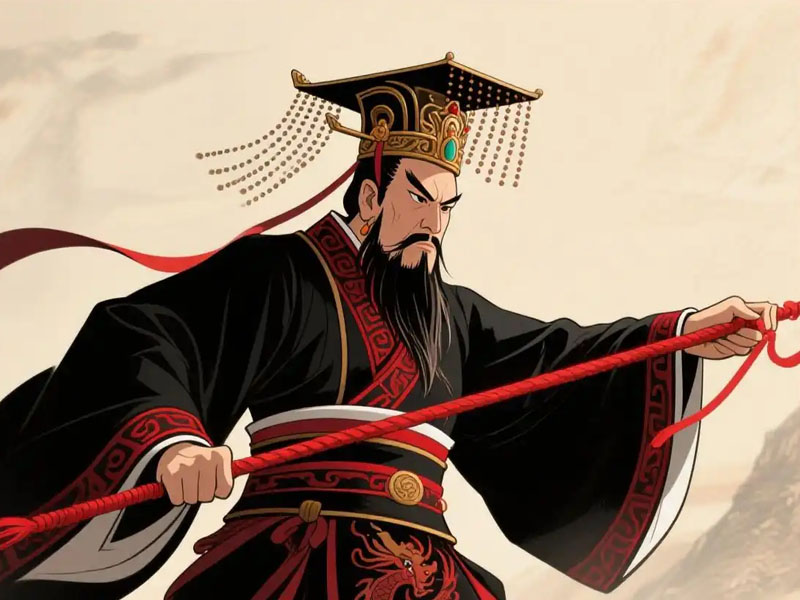
The iconic Half Mountain of Zhenshan Village hides an ancient legend that has been passed down for thousands of years, adding romantic and mysterious mythological color to the tough stone ancient village. It is said that after Emperor Qin Shi Huang unified the world, he held a powerful mountain-driving whip, intending to move mountains to fill the sea and build a road to the immortal mountains. When he toured here, he saw the majestic mountains and gathered spiritual energy, so he waved the whip to drive the mountain. With a powerful force, the whole mountain was split in two. One half remained by the Huaxi River, becoming the backing of today's Zhenshan Village and guarding the peace of the village; the other half was thrown far into Yunnan Province. The remaining Half Mountain looks like a lying turtle standing by the water, with a peculiar mountain shape and magnificent scenery, becoming a unique natural landmark of Zhenshan. This folk legend passed down by word of mouth embodies the local people's awe and love for the mountains and rivers, and also gives the mountains and rivers of Zhenshan both historical depth and mythological romance.
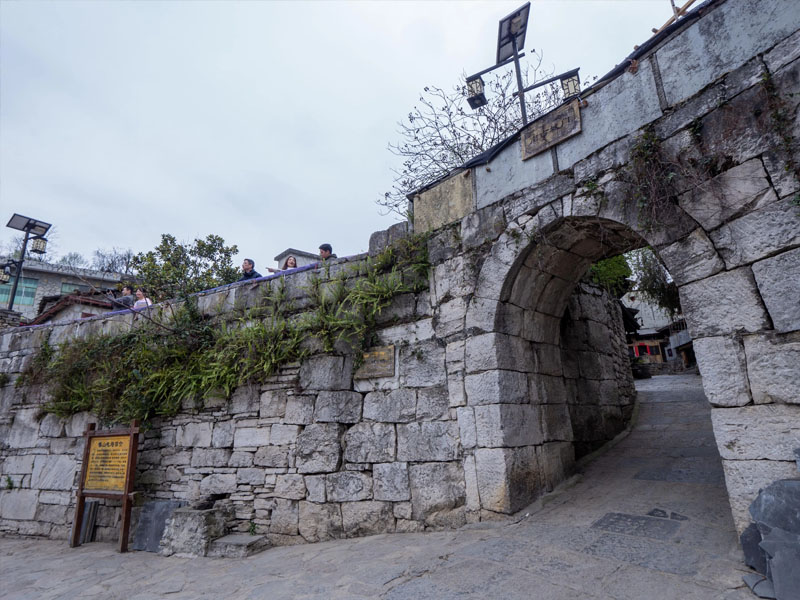
The Zhenshan Fortress Wall is the thickest historical background of the village. Built during the Wanli Period of the Ming Dynasty and repaired many times in the Qing Dynasty, it is the core military relic of the Ming Dynasty garrison system. The entire fortress wall is exquisitely built with large bluestones, with an original total length of about 1,800 meters. Although it has been eroded by wind and rain and damaged by wars, the entire foundation is completely preserved. The existing core wall is located in the middle of the village, with a total length of more than 700 meters, a height of 5 to 10 meters, a base width of 3 to 4 meters, and a wall thickness of 3 meters, with a grand scale and majestic momentum. The fortress wall is built along the mountain terrain, with the eastern and southern sections relying on natural cliffs to form natural barriers. Ancient military facilities such as battle paths remain inside the wall, with a complete offensive and defensive system. There are two stone arch gates with gate towers at the north and south ends of the village. The south gate is well preserved with a complete shape, while the arch top of the north gate is slightly damaged, showing the vicissitudes of ancient charm. In 1995, the Zhenshan Fortress Wall was officially announced as a Cultural Relic Protection Unit of Guizhou Province, which is a precious physical relic witnessing the history of Ming Dynasty garrison in Guizhou and frontier governance.
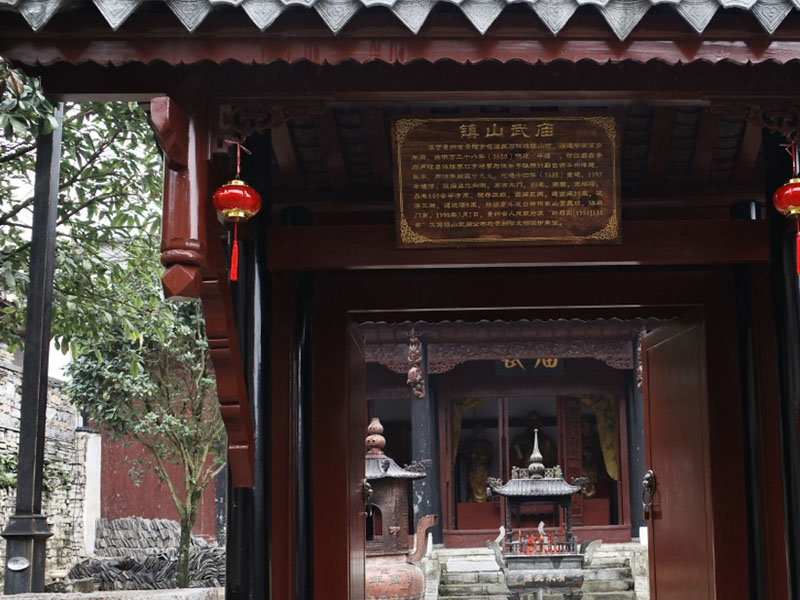
The Zhenshan Martial Temple is the most precious existing ancient building relic of the Ming Dynasty in the village, bearing the military history of garrisoning troops and the century-old incense culture of Zhenshan. Built in the 28th year of Wanli Period of the Ming Dynasty (1600) under the auspices of General Li Renyu who garrisoned in Guizhou, the original purpose was to bless the safety of soldiers, the continuation of descendants and the peace of the village. After centuries of vicissitudes, the ancient temple was destroyed by war during the Xianfeng and Tongzhi periods of the Qing Dynasty, rebuilt in the 14th year of Guangxu Period (1888), and repaired and improved again in 1997. Facing south, the temple covers an area of more than 600 square meters. It was originally a three-courtyard complex including a gate, an inverted hall, wing rooms and a main hall. The existing core main hall is five bays wide and three bays deep, adopting a mixed structure of post-and-lintel and column-and-tie construction, with a gable and hip roof covered with grey tiles and exquisite lattice doors and windows, which is a typical Ming and Qing mountain ancient building shape. The temple retains a profound historical heritage, and now often holds Zhenshan history photo exhibitions, telling the village's garrison history and national integration history. In 1995, the Zhenshan Martial Temple, together with the fortress wall, was listed as a Cultural Relic Protection Unit of Guizhou Province, which is the core physical historical material for studying the Ming Dynasty garrison culture and mountain ancient buildings in Guizhou.
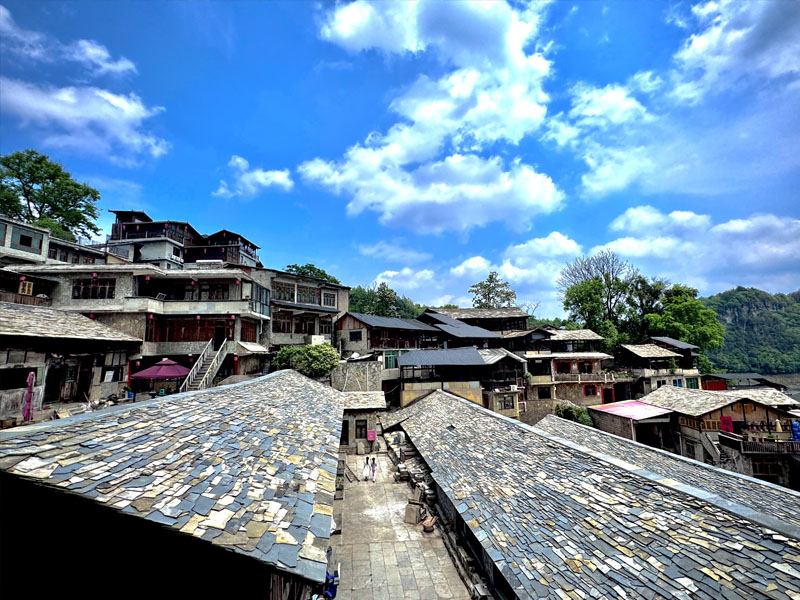
Zhenshan Village is known as the "Stone Kingdom" and is a rare all-stone ancient village in Guizhou and even the whole country. Benefiting from the rich bluestone resources locally, the whole village has realized all-round stone art construction: stone foundations, stone walls, slate roofs, stone brick roads, slate patios, and even the water tanks, grain tanks, mangers, stone tables and stone benches used in old times are all carved from stone. The slate roof here is an iconic feature. Without blue tiles or modern building materials, natural thin slates are laid layer upon layer, which are waterproof, heat-insulating, durable and suitable for the humid mountain climate. It is the survival wisdom of the local ancestors to adapt to nature and adjust measures to local conditions. The whole village integrates stone and wood, combining hardness and softness. The simple stone building complex stands against mountains and waters, completely preserving the original style of Ming Dynasty fortress settlements, and can be called a living museum of mountain stone dwelling architecture.
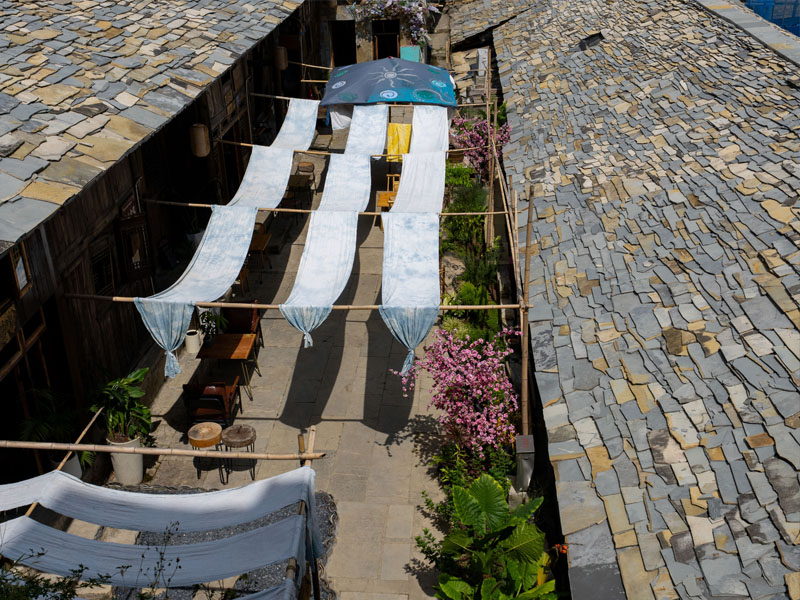
The most touching architectural character of Zhenshan Village lies in the layers of slate dwellings and corridor courtyards. The village dwellings are built according to the mountain terrain and rise step by step, following the natural elevation difference of the mountain to form a unique stepped mountain dwelling pattern. The buildings here inherit the Ming Dynasty fortress craftsmanship, adopting a typical mixed structure of wood frame, post-and-lintel and column-and-tie construction. The walls are built with regular stones, and the roofs are covered with natural thin bluestone slates, abandoning modern bricks, tiles and concrete, making them pure original ecological stone and wood buildings. Most courtyards adopt the classic three-courtyard layout of one main hall and two wing rooms. Transparent corridors surround the courtyard, and the patio is fully paved with large slates. The doors and windows are matched with exquisite carved lattice fans, simple and elegant. The ancient dwellings in the upper village fortress have a regular pattern and clear etiquette system, retaining the rigorous charm of Ming Dynasty garrison buildings. Every inch of texture is an architectural treasure integrating Buyi and Ming Dynasty garrison cultures.
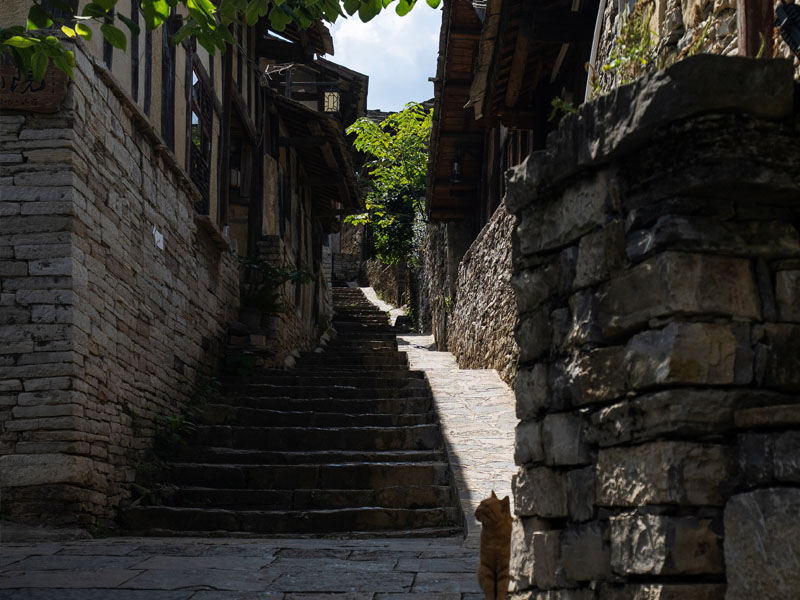
Deep into the hinterland of the village, crisscrossing stone alleys connect the mortal context of the whole ancient village. All the alleys in the village are paved with natural bluestones. After hundreds of years of being stepped on by people and horses, the stone surfaces are warm and bright, with a patina texture of years. The alleys wind along the mountains, with high and low terrain, and stone steps lead up to the stone courtyards and wooden doors of every household. Unlike regular modern streets and alleys, the ancient alleys of Zhenshan are casual and natural, with winding paths leading to seclusion. Alleys connect courtyards, and courtyards connect stone walls, layer upon layer and row upon row. Walking among them, you can hear the mountain breeze and village whispers in your ears, and occasionally meet leisurely villagers and playing poultry. The 400-year-old fortress fireworks and Buyi daily life are all hidden in these deep stone alleys, with a simple and healing atmosphere.
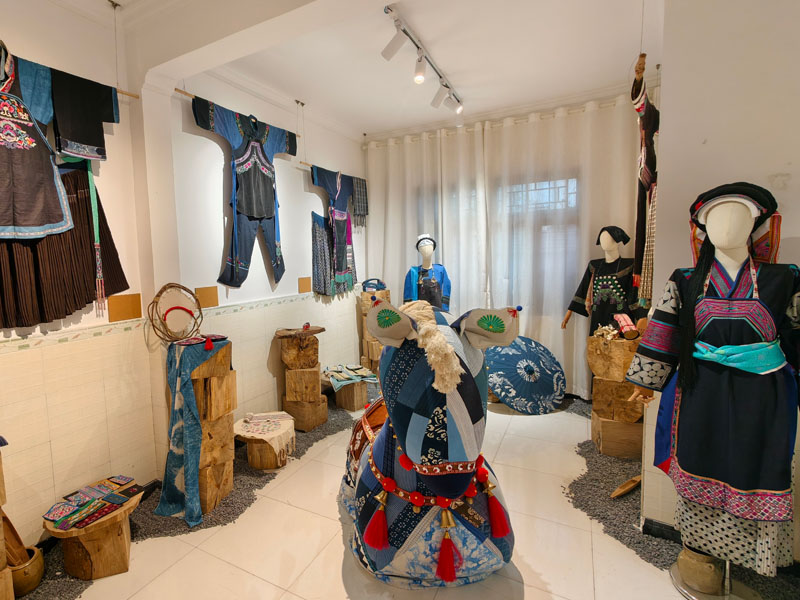
The essence of Buyi culture in Zhenshan Village lies in the intangible cultural heritage skills passed down from generation to generation. Batik, tie-dye and Buyi embroidery are the most representative traditional crafts of the Buyi people, and also the life skills that villagers have adhered to for generations. Buyi batik uses natural beeswax as raw material, with manual waxing and dyeing weaving. The blue and white interweaving patterns are vivid, with landscapes, flowers, birds and plants lifelike, simple and elegant with strong oriental aesthetics; tie-dye is casual and natural with unique texture, and each work is unique; Buyi embroidery has rich stitches, and traditional techniques such as yarn picking and horsetail embroidery are exquisite, with delicate embroidery and elegant color matching. These intangible cultural heritage skills do not need drawings and are all based on intention. They are integrated into all aspects of villagers' lives from daily clothing to decorative ornaments, bearing the thousand-year-old aesthetic taste and cultural inheritance of the Buyi people, and are the most precious living intangible cultural heritage in the mountains.
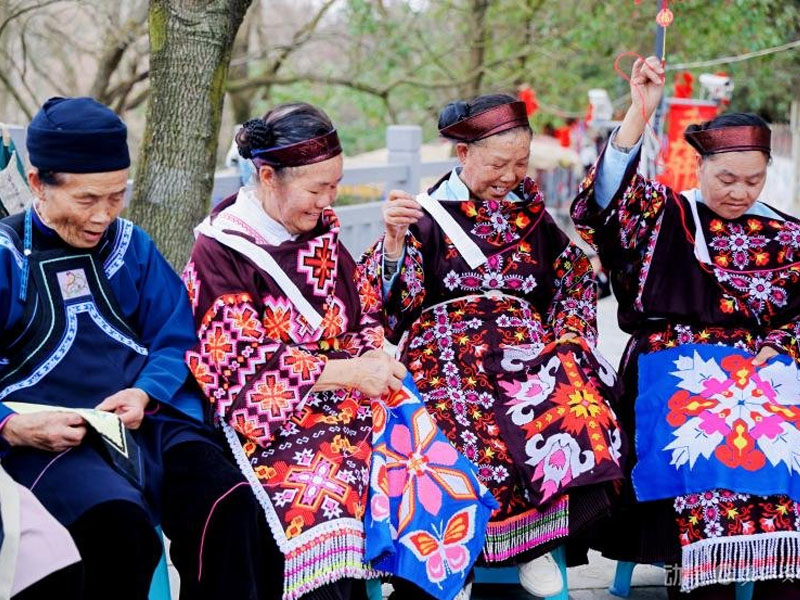
In Zhenshan Village, national culture is never sealed in exhibition halls, but lives vividly in the daily life of villagers. The older generation of Buyi villagers in the village still adhere to the traditional way of life, wearing orthodox Buyi traditional costumes and continuing the thousand-year-old national cultural context. Traditional Buyi costumes are simple and elegant with exquisite craftsmanship, mainly in dark blue and navy blue, matched with hand-embroidered aprons and exquisite headdresses. The patterns are drawn from landscapes, flowers, birds and pastoral scenery, implying good luck and health. Each costume is hand-woven, and every stitch is full of the aesthetic wisdom and cultural heritage of the Buyi ancestors. Years have dyed the hair white, but have precipitated the purest national character. The appearance of the elderly in traditional costumes is the most touching cultural background of Zhenshan, silently telling the thousand-year-old life aesthetics and cultural inheritance of the Buyi people.
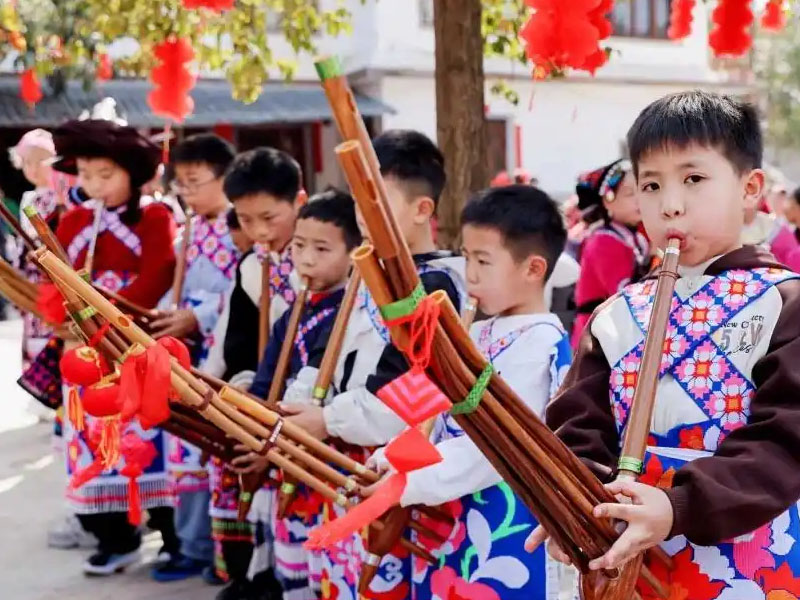
Every year from the 11th to the 13th day of the first lunar month, Zhenshan Village holds the grand Tiaohua Chang (Flower Jumping Festival) folk activity, which is a very representative Spring Festival folk activity in Huaxi area. Different from the single-ethnic attribute of flower jumping festivals elsewhere, the Zhenshan Flower Jumping Festival is a witness of the generations of friendly coexistence between Buyi and Miao people: Buyi villagers provide the venue and coordinate the activities, and Miao and Buyi people from the surrounding areas gather here to attend the grand event. The activity content is rich and diverse, with melodious lusheng music and graceful dance steps. Villagers hold hands and dance in circles. There are also characteristic activities such as bird fighting, folk performances and market experience, with ten thousand people gathering and bustling. The gate-blocking wine and welcome songs open the grand event, the ancestor worship ceremony commemorates the ancestors, and the singing and dancing pray for peace and prosperity of the country. This thousand-year-old grand event vividly interprets the humanistic heritage of multi-ethnic tolerance, coexistence and harmony in Zhenshan Village.
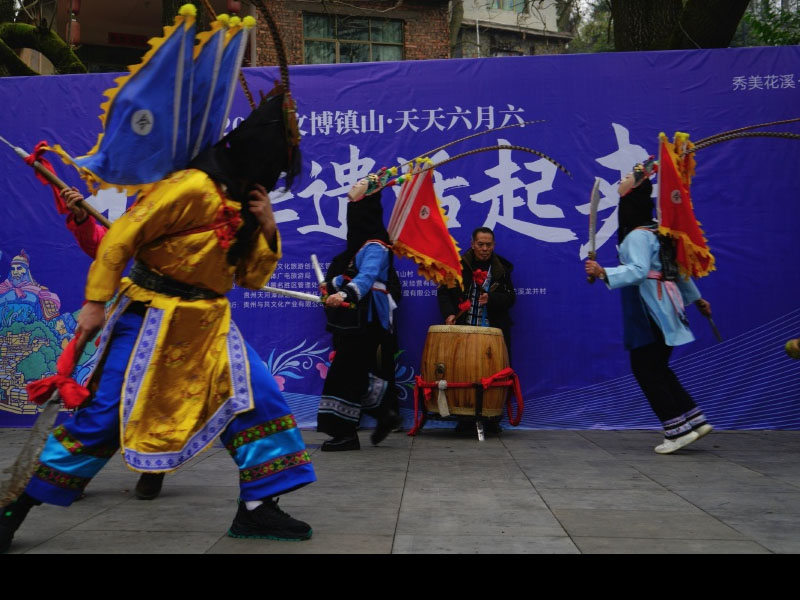
The June 6th Festival, known as the "Buyi New Year", is the most solemn and grand traditional festival of the Buyi people and a thousand-year-old folk ceremony inherited in Zhenshan Village. At the time when the summer rice transplanting is over and farm work is temporarily suspended, villagers put down their work, gather in the village, celebrate the harvest and pray for a good year. On the day of the festival, the village builds a singing stage, and all the villagers, young and old, gather in full costumes to meet friends and express feelings through songs. Buyi folk songs are melodious and simple in tune, with lyrics derived from life and mountains and waters, telling about daily work, landscapes and beautiful expectations. Young men and women get to know each other through antiphonal singing, and elders sit around chatting. The whole village is immersed in a lively and peaceful atmosphere. For 400 years, this summer celebration has never been interrupted. It is not only a ceremony for the Buyi people to be grateful to nature and celebrate the harvest, but also an important carrier for inheriting the national language and folk culture.
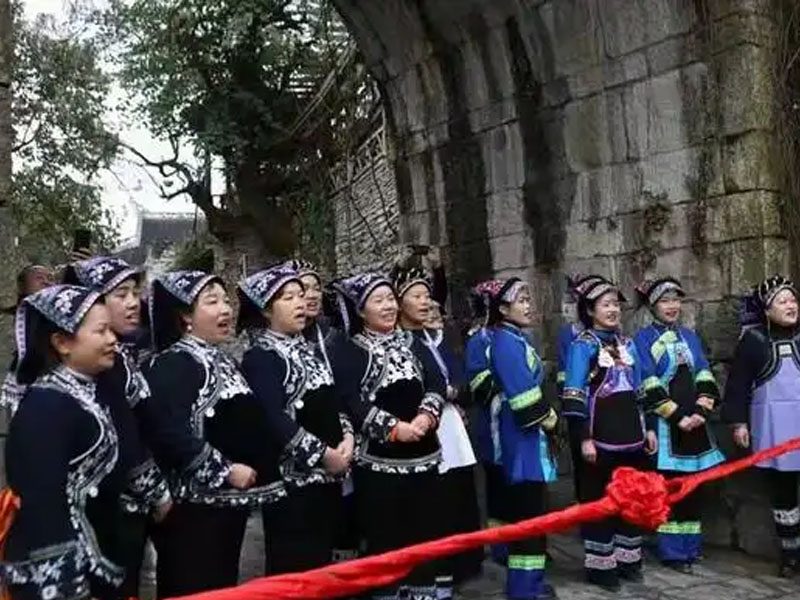
Folk songs are the language of the Buyi people and the cultural soul that has flowed in Zhenshan Village for thousands of years. Between the mountains and waters, in the streets and alleys, and at festivals, melodious Buyi folk songs echo from time to time, becoming the most beautiful background of the ancient village. Buyi folk songs have a wide range of themes and simple tunes, including love songs, farming songs, welcome songs, ancient songs and many other categories. They are easy to understand and catchy, bearing the life wisdom, emotional expectations and historical memories of the ancestors. Whether it is collective antiphonal singing at festivals or casual singing in daily leisure, villagers express their feelings, meet friends and narrate history through songs. The folk songs passed down from generation to generation have preserved the folk roots of the Buyi people, and also made the 400-year-old Zhenshan story live on and be passed down from generation to generation in the mountain songs.
WeChat Support